
Will the Fourth industrial revolution cause some job losses? The short answer is ‘Yes’, and this in a long run is good for us.
Imagine that you are aboard a sinking ship, size of the Titanic, in the middle of the ocean. The misfortune is happening in a pitch-dark night and the ocean currents are tempestuous. You have access to a lifeboat, however you don’t have sight of any nearby land. Would you either attempt to fix the ship or jump on the lifeboat and see where you’ll land?
I find this to be analogous to our current state of the economy (the sinking ship). The comparison fits because of the growing unemployment rate and cost of living. Attempting to fix the ship, is simply trying to maintain the status quo or get back to how things were before – which is nearly impossible. On the contrary, the lifeboat is metaphorically the 4th industrial revolution (our only chance of survival) and the nearby land is a more stable state of our country’s economy.
While technologists are enthusiastic about the fourth industrial revolution (4IR), the general population is wary about it. One of their main concerns is that robots and AI systems will take people’s jobs and aggravate the unemployment rate. Furthermore, insufficient presentation to the general public about how exactly the 4IR will advance the economy isn’t comforting either. Nevertheless, we can all agree that things are not getting better regardless of the 4IR.
People are concerned about job security in the wake of the 4th industrial revolution, yet in spite of it the unemployment rate has been worsening.
Here is why I am saying the 4IR is our only chance of survival even though the masses are wary of it:
The truth of the matter is that revolutions have trade-offs. They forcefully overthrow old regimes, and establish newly developed ones. The overthrowing process is painfully disruptive to customary habits. The pleasure of enacted new norms is only observed at a later stage when the dust has settled.
For example, before the dawn of the 2nd industrial revolution in the late 19th century, people were using horses as the main mode of transportation. There were many careers and jobs dependent on the equine-powered transit. These included horse breeders, herdsman, feed-makers, trainers, traders, carriage-drivers, etc.
The equine industry was prevalent and significant to economies. Many people’s lives were reliant on it in various degrees.
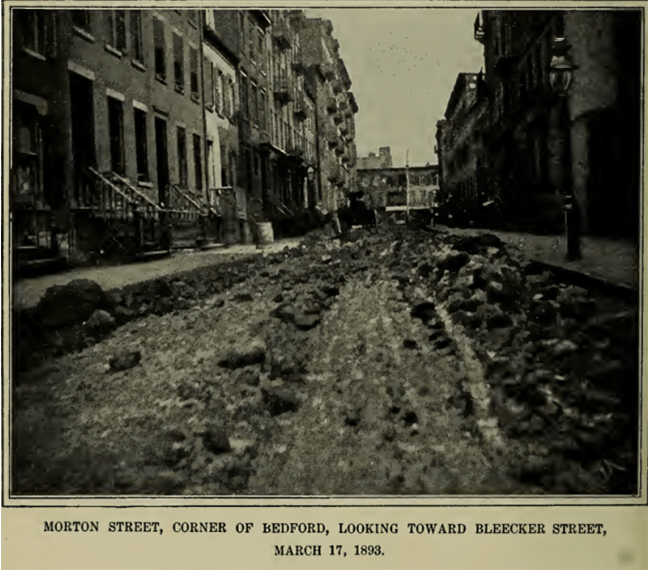
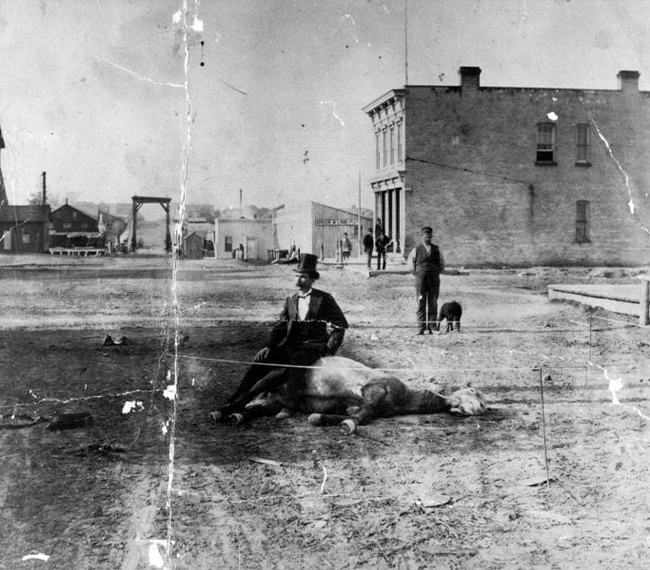
However, horses soiled everywhere. Their dung engendered awful pungent smells and attracted vermin, which carried diseases. The obnoxious waste, if collected annually in New York City alone, would have filled about 5,500 shipping containers [1]. In addition, some horses were abused and overworked, and if they broke down they were cruelly killed on the spot and left to rot in the open [2]. These were signs of an impaired system.
The 2nd industrial revolution introduced automobiles. Initially, majority of people hated them. Not only were automobiles primitively loud and smoky [3], but the industry they were about to initiate (currently known as the automotive industry) was a serious threat to many careers and jobs. Does that sound familiar?
Unbeknownst to the people, the newly forming industry was going to produce more careers and jobs than the equine industry ever did, and moreover boost the quality of life. The automotive industry launched endless careers and jobs from technicians, mechanics, car dealers; to road construction companies, car rental companies, and even the entire traffic department. It made medical emergency services and truck freight services (distributing food to grocery stores) possible – amongst other critical things. All these economic benefits were experienced after the heartache brought by obsoleting equine-related careers and jobs.
Though there was reluctancy towards the 2nd industrial revolution, it turned out to be massively beneficial.
We are currently stagnant in our old ways. At this point, they are causing more harm than they benefit us. Just like the equine-transit industry before the 2nd industrial revolution. There is beauty in being early adopters opposed to hoarding. Being receptive to the 4th industrial revolution early on, will allow us to possess authority in future industries which 4IR is bound to create.
Countries which embraced and invested resources on the possibility of automobiles during the dawn of the 2nd industrial revolution, have relished flourishing economies. They spent years developing the automotive industry while slowly replacing the equine industry. Within 20 years of diligence and commitment, they were powerhouses for over 90 years. In comparison, countries which didn’t adopt early were only left with importing options, at high costs, and minimal manufacturing participation (ingredients of a flimsy economy).
In conclusion, yes the 4th industrial revolution will make some careers and jobs obsolete, although at the gain of presenting a surplus of new industries, careers and jobs. Embracing and investing in it as early as now, is our only opportunity to overturn the economy in the coming 10 – 20 years.
References:
- [1] Levitt, Steven D. (2011). Super Freakonomics: global cooling, patriotic prostitutes, and why suicide bombers should buy life insurance. New York: Harper Perennial.
- [2] https://www.blog.greenprojectmanagement.org/index.php/2019/05/13/pollution-why-we-replaced-horses-with-automobiles/
- [3] https://pilcrow.squarespace.com/stories/car-hatred